In brief: Some clinicians use focused shockwave or radial pressure-wave treatment as part of a plan for persistent Achilles tendinopathy. It is not a substitute for confirming the diagnosis, identifying whether pain is insertional or midportion, and discussing loading-based rehabilitation and other options.
Understanding the diagnosis
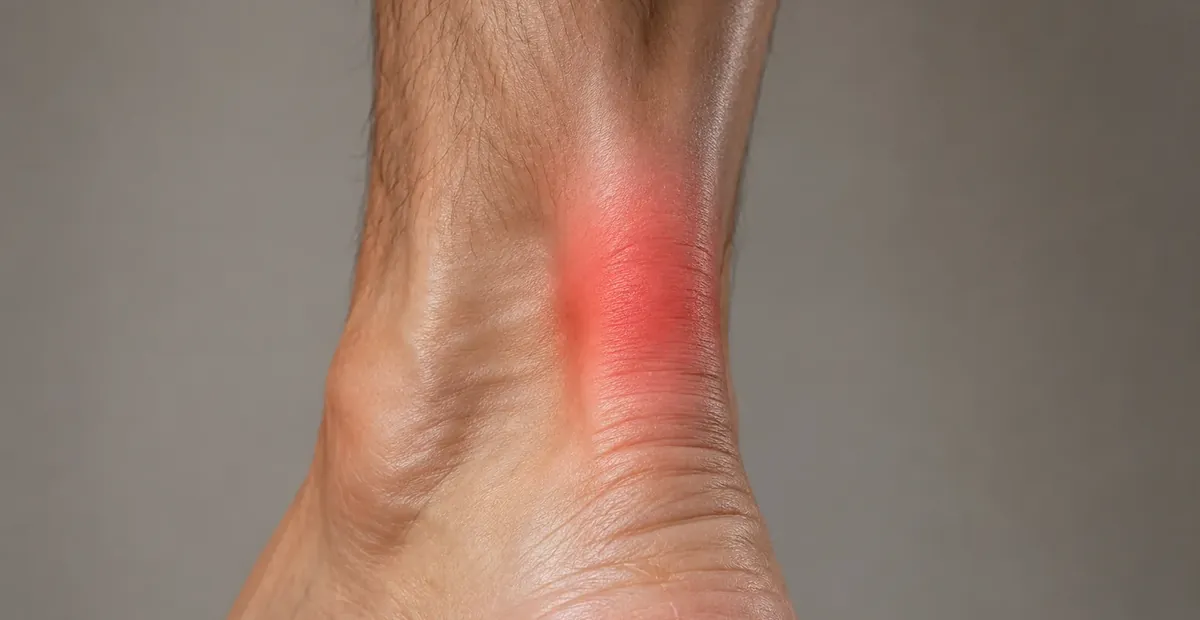
The Achilles tendon connects the calf muscles to the heel. Tendinopathy can occur near the heel attachment or farther up the tendon. Location matters because insertional and midportion problems may behave differently and may not be managed with identical exercises or procedures.
A clinician may consider symptom history, tenderness, swelling, strength and function. Sudden injury, marked weakness or a feeling of being struck in the back of the ankle can require prompt assessment for rupture rather than routine tendinopathy care.
Insertional and midportion symptoms
Insertional symptoms occur where the tendon meets the heel bone. Midportion symptoms occur higher up. This distinction can influence examination, exercise selection and how an applicator is positioned. Ask the provider to show you the treatment target and explain which diagnosis they have made.
Where shockwave may fit
Shockwave is generally discussed as one component of a broader conservative plan. Exercise and progressive tendon loading are commonly important, but the appropriate program depends on the diagnosis and the person. The provider should explain what continues alongside shockwave and what activity changes are advised.
Rest alone does not necessarily restore the tendon’s ability to handle load, while pushing through rapidly increasing pain can be counterproductive. A useful plan tells you which activities are acceptable, how exercise will progress and what symptoms should trigger a change.
What guidance says about uncertainty
NICE reports no major safety concerns in the evidence it reviewed for Achilles tendinopathy, while describing efficacy evidence as inconsistent and limited in quality and quantity. That is a useful model for patient counseling: treatment may be offered by experienced clinicians, but the uncertainty should be discussed rather than hidden.
Ask whether the provider’s expectations differ for insertional and midportion disease and what evidence supports the particular device and protocol being proposed.
Focused and radial terminology
Provider websites may describe focused shockwave, radial shockwave, radial pressure wave or ESWT. These are not automatically equivalent. The treatment depth and wave characteristics differ, and the website label may be imprecise. Request the device name and a plain-language explanation.
Questions to ask
- Is my problem insertional, midportion or something else?
- Is there any concern about a tear or rupture?
- What rehabilitation program accompanies treatment?
- Which device and wave type do you use?
- What outcomes do you track?
- When will we decide whether to continue or stop?
Be cautious with guaranteed timelines
Tendon recovery is not a fixed countdown. Duration of symptoms, tendon health, activity demands and the rest of the treatment plan can influence progress. A provider should give you checkpoints and realistic ranges, not promise that a set number of pulses or sessions will cure the problem.
When a second opinion can help
Consider another evaluation if the diagnosis remains vague, the practice cannot explain whether treatment is focused or radial, you are asked to stop all rehabilitation without a reason, or a large prepaid series is recommended before your tendon is examined. A second opinion is also reasonable when symptoms worsen or function continues to decline.
Find care near you
Compare local foot and ankle shockwave providers
Browse the directory by state and city, then contact the practice to confirm its device, treatment location and experience with your condition.
Find providers by stateSources and further reading
- NICE: ESWT for Achilles tendinopathy
- Mayo Clinic: Current indications and device types
- ISMST recommendations
This guide is general information, not medical advice. It does not diagnose a condition, determine candidacy or replace care from a qualified clinician.